El Pecas
Los renglones torcidos de DiosEl Pecas is a boy whose parents concealed him for years in an abandoned granary after deciding that he had the devil inside him. Rescued in a state of severe neglect, he is brought to the asylum by the Spanish Civil Guard and admitted to its Emergency Department. His story makes confinement both the consequence of rural superstition and a stark fact of his life before institutional care begins.
The episode in the village
El Pecas’s history is set against an episode in which boys from the village are found in the woods in a confused, agitated state. Their parents and other men carry them back toward Villafuente de Calcamar, believing that they have been possessed and intending to ask a priest to exorcise them. One boy dies before reaching the village. In the account later given to the hospital staff, El Pecas’s parents explain their own response through the fear that their son would bring disgrace on the family and that villagers would blame them for any future misfortune.
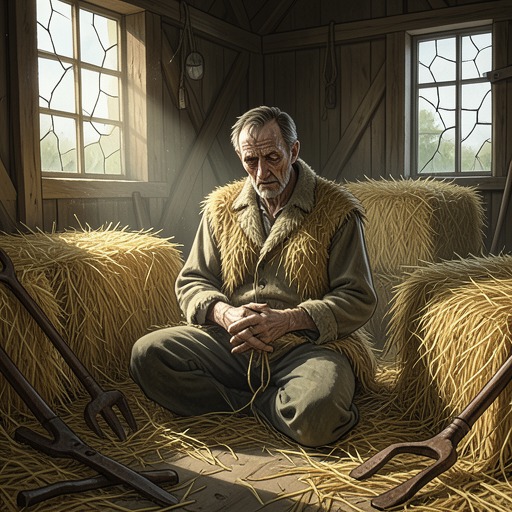
They decide not to keep him at home. Instead, they bind and gag him, put him inside a sack, and carry him to an isolated property, where they lock him in an abandoned granary. El Pecas is ten years old on the day he is imprisoned. His parents take turns bringing him bread, water, and apples twice a week. This limited provision sustains him, but it does not alter the basic reality of his captivity: a child is deliberately removed from the community and kept out of sight because his parents fear what others will say about him.
Rescue and admission
Years later, people searching in the area find El Pecas naked and profoundly malnourished, with hair and a beard reaching his waist. The account describes his nails as claw-like and his response to noise, voices, and a lantern’s light as one of terror. The rescuers choose the rain over shelter rather than remain near the frightening scene; once they reach safety, they report what they have seen to the first post of the Spanish Civil Guard. The Civil Guard returns with help from el Adobe, rescues El Pecas, and reports the case to a judge.
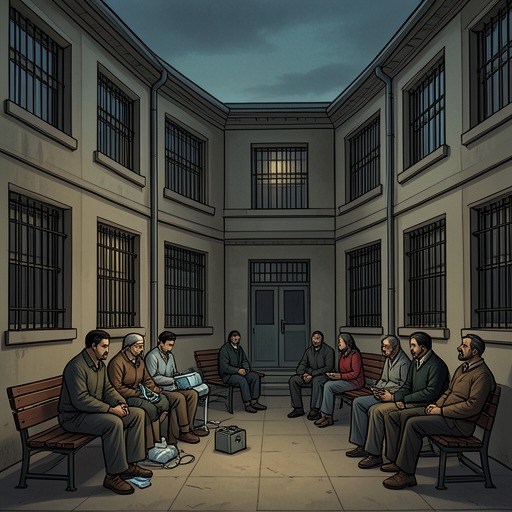
The judge orders El Pecas’s parents prosecuted and El Pecas admitted to the asylum. José Muescas directs the Emergency Department where he is received. He arrives wrapped in a blanket on the same day as Alice Gould’s disastrous interview with Samuel Alvar. The juxtaposition places his arrival within the hospital’s unfolding present, while his history reaches the doctors by a chain of testimony: el Adobe speaks to the Civil Guard, the Civil Guard reports to José Muescas, and Muescas recounts the case to his colleagues at a doctors’ meeting.
A resident, and a life shaped by confinement
El Pecas’s admission is also framed as a question of when someone becomes a resident. Montserrat Castell objects that the person in question is not yet a resident; Alice Gould insists that the admission has just been issued and that he is one. In the same brief scene, Alice bends to retrieve a dropped lighter and hands it to the person asking for it. The exchange gives institutional status an immediate, practical meaning: a new arrival is not merely someone on the threshold but someone the hospital has formally taken in.
The contrast between rescue and admission is consequential. The court’s order transfers El Pecas from a hidden, privately maintained captivity into a medical institution, but the facts of his rescue remain inseparable from the deprivation that preceded it. His history is not presented as a long account of life after admission; instead, it reaches the reader through the evidence of his condition and the testimony relayed to the doctors. The hospital becomes the place where that concealed past is made reportable, examined, and entered into an institutional record.
Narrative significance
El Pecas’s story turns the language of possession into a record of human actions: his parents fear social condemnation, imprison their ten-year-old son, and feed him only intermittently; rescuers find him years later in a condition that reveals the cost of that decision. The sequence moves from a village’s supernatural explanation to a judge’s legal response and a doctor’s account before hospital colleagues. It does not resolve El Pecas’s later life, but it establishes the circumstances under which he becomes a patient: rescued from the home that had hidden him, and admitted to a system that now has to confront the consequences of his prolonged isolation.